Sorry, all. I realize it has been very long since I posted anything. I was diagnosed with terminal brain cancer in November. I will likely not be posting here any more in the future.
Keep sending out love and silencing hate... and keep reading. The world needs more readers even more than it needs strong writers. Reading is important.

Friday, August 10, 2018


Saturday, February 02, 2013
Review: Sir Gawain and the Green Knight by Unknown
 I cannot believe this is the first time I have ever read an Arthurian Legend. Before a few weeks ago, I didn't know this work was part of said canon... me being notorious for not reading reviews. In August I made a trip to the British Library and paid for a 'special exhibit', where I saw a copy of the Folio Society version of this work and based on the cover and a brief description, I was in love. When I finally joined The Folio Society in December, I knew this would be the first work that I purchased.
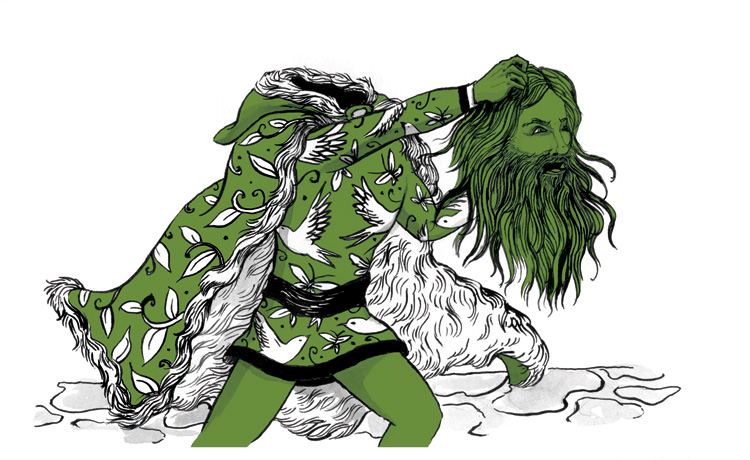
The translation of the Folio Society publication is by Simon Armitage and since I have no object of comparison, there is not very much I can say about it. It had a simple flow and was definitely an easy read. The illustrations by Diana Sudyka were not my cup of tea at all, with the exception of the beautiful cover... of of the most beautiful I have ever owned. The Folio Society publication was fairly large, measuring 13" by 9 1/4" - I believe it was a little too large to read with on the couch and my roomie thought it was a little humorous. There was a lot of blank space on most pages, but for those that love the feel of great paper, this was up to the usual thick standard with a creamy ivory colour.
The work itself is about a Green Knight that comes at Christmas to challenge the Knights of King Arthur to a holiday 'game'. He is completely green, from his clothing to his skin... and even his horse is green. He challenges anyone to cut of his head with an axe and if he lives, in one year, he gets a chance to cut off the antagonist's head - a sort of 'head for a head' thing. Why anyone thinks this is a cool party game is beyond me, but King Arthur accepts the challenge when no one else will. Sir Gawain stands up to the Knight simply to take Arthur's place.
I won't go into what happens from there, but the tale is all about honour, truth, sins of men and the temptation of men by women (see quote below). The tale in itself is told quite simply, but has a wonderful message. While Sir Gawain lives by an honour code, even he can fall off track when encountering certain situations in life and he must constantly remind himself of this to stay on what he believes is a righteous and honourable path.
I would like to eventually read the translation by J.R.R. Tolkien. Tolkien was influenced by many of these ancient works including this one and Beowulf which were instrumental in the crafting of his fantastical world.
I'm glad I read the work in general - it has a good message and I didn't see the plot twist coming, and while it gave me a good preliminary feel for Arthurian legends, it didn't have the impact of some of the other ancient works I have read as of late... such as Gilgamesh & The Song of Roland.
-------------------
QUOTATION:
"'And mind you commend me to your mannerly wife, both to her and the other, those honourable ladies who kidded me so cleverly with their cunning tricks. But no wonder if a fool should fall for a female and be wiped of his wits by womanly guile - it's the way of the world. Adam fell for a woman and Solomon for several, and as for Samson, Delilah was his downfall, and afterwards David was bamboozled by Bathsheba and bore the grief. All wrecked and ruined by their wrongs; if only we could love our ladies without believing their lies. And those were fellows from fortunate families, excellent beyond all others existing under heaven,' he cried. 'Yet all were charmed and changed by wily womankind. I suffered just the same, so clear me of my crime.'"
Review: Song of Roland by Unknown
"The Song of Roland (La Chanson de Roland) is an heroic poem based on the Battle of Roncesvalles in 778, during the reign of Charlemagne. It is the oldest surviving major work of French literature. It exists in various manuscript versions which testify to its enormous and enduring popularity in the 12th to 14th centuries. The oldest of these is the Oxford manuscript which contains a text of some 4,004 lines and is usually dated to the middle of the twelfth century (between 1140 and 1170)." -Wikipedia

I had never heard of The Song of Roland before my membership with The Folio Society, but I'm glad they introduced me to this work. This particular edition is translated by Charles Scott Moncrieff and illustrated by Anna and Elena Balbusso. It's hard for me to comment on the translation, but I found this work incredibly poetic and very easy to read. The illustrations were hit and miss for me - a very modern take that I don't really think fit the work. Some of the illustrations, such as the one further down in this review, were quite stunning. The cover presented is BEAUTIFUL... and I think, very representative of the story and, in this case, the most poignant scene of the poem.
This story is really about a battle between Pagans and Christians, the Christians (Romans) attempting to take over large amounts of territory to pass along Christianity to others with 'inferior' religions. King Charlemagne is about to wage war with King Marsile (Muslim), but offers treasure and conversion to Christianity if Marsile and the Franks will go back to France.
*START OF MAJOR PLOT SPOILERS*
Roland's stepfather, Ganelon, becomes a traitor in order to get back at Roland for volunteering him to be the messenger of the offer. They betrayal of Roland and the Christian Knights leads to their slaughter. Roland's pride becomes his downfall when he refuses to blow his horn (olifant) when he sees that he is outnumbered. He acts on courage and the belief in God - he himself believing that he is fated to die. After everyone dies, he finally blows his horn... bursting his temples and causing his own martyrdom. He is met by a saint who takes him to Paradise.

*END OF MAJOR PLOT SPOILERS*
The ending of the work, I believe, is the best part. King Charlemagne has another dream (the first from God, warned him about the treachery of Ganelon - which he believes is fated and cannot be stopped) that tells him that he must continue to push on to battle with another foe - I suppose to continue to spread the message from God (Christianity). He is tired, but realizes that man does not choose his own path and he must follow what is presented to him. This reminds me of my favourite Steinbeck quote, "You don't take a trip, a trip takes you." I think that if you let yourself be open to things the universe will guide you. I believe we each have the power of choice, but I believe we are given cues to follow and can choose to do so or not. King Charlemagne is clearly put all his faith in these cues, which he believes come from God. Giving up your control to a 'greater power' creates quite a struggle and this struggle is evident with Charlemagne and is captured quite beautifully.
This work was a little too 'rah rah Christianity' for my liking, but is quite fascinating when looking back on the believed cleansing by Christians over 1,200 years ago. The blood-thirsty revenge seems very un-Christian on the surface, but this gruesome slaughter was seen as justice and not as cleansing... and I suppose the same could be said of Hitler's belief in the genocide, though not based on religious principles.
The pride of Roland was quite frustrating and proved to be his Achilleus' heel. This was one example in the poem that showed the characters in the Song of Roland to be quite human... both with strengths and flaws.
I'm quite glad that I read this work - it has left quite an impression on me. I think I will eventually do some more research into the beginning sweep of the forces of Christianity. I know there is a new set from The Folio Society called 'Pagans and Christians' by Robert Fox Lane... and I believe I will keep my eye out for this one. If anyone has read that work or The Song of Roland, would love to know your thoughts!
Sunday, January 20, 2013
2012 Classic Literature Year in Review
 So we're three weeks into 2013 and I'm just getting to a 'year in review' post for 2012. I didn't get back into the country until two weeks before Christmas and I have been spending time catching up with people and getting my bearings. From a personal perspective, 2012 was a great year for me and I guess it's very difficult to complain when you only work for 1/3 of it, travel for 1/2 of it and use the remaining time to organize, reflect and read. Last year I was only able to get to 18 books or so and this years' goal was to get through two a month (24 for the year). I did it - and still had time to read a book of short-stories and a Shakespeare play.
This year I spent a lot of time reading the ancient classics, and I was extremely lucky to have a bookclub which thought this was a good idea. After reading Homer and Aeschylus last year, I was able to read some Euripides and Sophocles in order to round out some of the great tragedians. I was also able to read Virgil's Aeneid to get a Roman epic experience. This led to a better understanding of Dante's Divine Comedy... as Dante travels around Hell, Purgatory and Heaven with Virgil as his guide.
I was also able to read a bunch of other epic, non-Greek works such as Beowulf, The Rubaiyat of Omar Khayyam and the Tale of Genji. There is only one really long work read this year - that of Genji... a 1,200 page epic from 1,000 AD.
There are a few books that I have wanted to read for a long time that just don't fit into any categories or grand unified reading plan, such as Walden. There are a bunch more self-help type books this year, as I have been going through some transformational change given some of the life-events mentioned at the top of this post. Many of the other books were ones that I read simply because I had access to them traveling... a freeing way to read when one is used to providing oneself with a very structured approach to reading.
So here are the 16, with links to my thoughts on them:
Unknown. Beowulf
Alighieri, Dante. The Divine Comedy: Inferno
Alighieri, Dante. The Divine Comedy: Purgatory
Alighieri, Dante. The Divine Comedy: Paradise
Boulle, Pierre. The Bridge Over the River Kwai
Card, Orson Scott. Shadows in Flight
Chekhov, Anton. Short-Stories
Euripides. Medea, Hippolytus and The Bacchae
Hawthorne, Nathaniel. The Scarlet Letter
Honore, Carl. In Praise of Slow
Kerouac, Jack. On the Road
Khayyam, Omar. The Rubaiyat of Omar Khayyam
Larsson, Stieg. The Girl with the Dragon Tattoo
Melville, Herman. Typee
O'Brien, Robert C. Mrs. Frisby and the Rats of Nimh
Plato. The Republic
Redfield, James. The Celestine Prophecy
Rubin, Gretchen. The Happiness Project
Shakespeare, William. Henry V
Shikibu, Murasaki. The Tale of Genji
Sophocles. Oedipus the King
Thoreau, Henry David. Walden
Virgil. The Aeneid
Wallace, Lew. Ben-Hur
Wells, H.G. The Island of Dr. Moreau
Woolf, Virginia. Mrs. Dalloway
Biggest Disappointment of 2012: Beowulf & The Rubaiyat of Omar Khayyam
With Beowulf, I think I read the wrong translation (William Leonard). Everyone that read the Seamus Heaney translation seemed to like the work a lot more and given that I tend to generally like these myths/ancient epics (such as Gigamesh), I was quite surprised that this one didn't resonate with me especially since it inspired so much of Tolkien's work. The Rubaiyat is so sacred, that I was surprised that I didn't find more transcendence in it... when I think back, what sticks out the most to me was all the wine drinking.
Most Difficult to Read in 2012: The Republic
Plato's Republic was tremendously satisfying, but it was rather academic in many cases. Coupled with some of the language and outdated theories (due to more information now as well as different lifestyles), there were times in this work that I really struggled. I found that it was all worth it, but it did test my patience at times.
Best Book of 2012: The Celestine Prophecy
This has nothing to do with the quality of the writing or the literary acumen, but simply that this book changed my life when I was in need of self-discovery.
New Authors Discovered/Explored in 2012: Dante, Boulle, Chekhov, Euripides, Hawthorne, Honore, Kerouac, Khayyam, Larsson, Melville, Redfield, Rubin, Shikibu, Sophocles, Thoreau, Virgil, Wallace, Woolf... a good majority of my reads this year were from new authors (to me).
Genres/Books/Authors I wish To Read More Of in 2013: I really want to read more Greek works, other ancient epics, some myths, some poetry and at this very moment... I feel like more Hemingway and Steinbeck. I also want to try some Russians like Gogol and Pushkin (both of whom I've never read).
Thanks for reading this post and bearing with me through my hiatus from book reviewing. Looking forward to hearing about your experiences from last year, any recommendations you have for me, and/or your thoughts in general.
Review: Short-stories by Anton Chekhov
 Short-stories are a difficult to review on the whole, even at the best times. In my case, I have traveled thousands of miles (kilometers) as of late, it has been many months since I read this work, I have read about 10 books since these stories, and I didn't write down any notes! This 'review' is an impossibility and it had been daunting for me, which is why I left it until last in my reviewing backlog.
 I'm a big fan of the Russians greats, which I think I have documented here quite often: Tolstoy, Dostoevsky, Nabokov, Turgenev, Pasternak, etc. I was lucky to have picked up a few of Chekhov's stories in Nottingham when I was traveling around; I thought that it would be a great idea to read a few of them on trains or before bed or at other moments where I didn't have very much time to read something seriously. I had never read any short-stories by Chekhov before, but since he is well known as one of the masters of the short-story, I was excited to plow through them.
I read somewhere that one thing that many people struggle with is Chekhov's particular style in regards to the 'message' located within each story. I found that the reviews I had read were correct - Chekhov leaves it up to the reader to decide which lessons to glean from most of his stories. I believe he tells a story to have told it and once it's completed, he moves onto the next not really caring what readers THINK of it. Chekhov was a physician before he ever became a writer and I could theorize that he just began to write for sheer enjoyment and not with a greater purpose in mind. I don't pretend to know if I would be right in making this assumption, but it seems to make sense after reading these 24 stories.
I also agree that he seems to embody the Russian way of life (granted, I am fairly ignorant in a very good portion of their history), preferring to focus on common people as opposed to the aristocracy and 'elite' of society. When I think back upon the stories many months after reading them, I can FEEL various scenes in the stories and I think that's indicative of a good writer. I will definitely re-read some of these stories in the future and make substantial notes on my feelings about each one, and which ones are my favourites. I'll now just present a list of which stories were involved in my edition (along with a small amount of quotations), more for my own benefit than anything else. Would love to hear what you think of Chekhov's short stories or his only novel, The Shooting Party.
1.
Overseasoned
2.
The Night Before Easter
“why is it that even in the presence of great happiness, a
man cannot forget his grief?”
“when a man is tired and drowsy he thinks that nature, too,
is in the same condition.”
3.
At Home
“No doubt that is one of the laws of society – the less an
evil is understood the more bitterly and harshly it is attacked.”
“The more enlightened a man is the more he is given to
reflection and hair-splitting; the more undecided he is, the more full of
scruples, and the more timidly he approaches a task.”
4.
Champagne
5.
The Malefactor
6.
Murder Will Out
7.
The Trousseau
8.
The Decoration
9.
The Man in a Case
“How many wrong and foolish deeds are committed in our
country towns because we are bored!”
10.
Little Jack
11.
Dreams
12.
The Death of an Official
13.
Agatha
14.
The Beggar
15.
Children
16.
The Troublesome Guest
17.
Not Wanted
18.
The Robbers
19.
Lean and Fat
20.
On the Way
21.
The Head Gardener’s Tale
22.
Hush!
23.
Without a Title
24.
In the Ravine
Review: Henry V by William Shakespeare
 |
| I didn't read the Graphic Novel but... I thought this was an unusual, non-formulaic image of Henry V |

Many aspects that I missed in the theatre, I was able to dedicate more time to while reading the work. In addition, because I had SEEN all the characters they became alive on the page much quicker - and I was able to compare the characters in the novel to how the actors portrayed the characters in the play to see if I felt they were able to get the characters right or if they did Shakespeare himself a disservice.
Henry V at Shakespeare's Globe was quite breathtaking, despite the tremendous uncomfortable feeling present in my seating arrangement. I have long legs and I sat in the front row with a wooden railing in front of me - I was never comfortable and it took away much of my concentration on the dialogue. This play was quite enjoyable and stimulated much further research into the King and the story itself. I do also remember thinking that the movie adaptation with Kenneth Branagh was one of the better Shakespeare film adaptions I've seen (along with Hamlet with Kenneth Branagh, if I recall correctly - unsure if I enjoyed this one more or less than the Mel Gibson version).
 In summary, the play is about the events pre and post The Battle of Agincourt, a battle between the English and the French in 1415. The battle is won by the British, and according to the play, there is such an extreme difference in body count that Henry V believes that God has intervened on his behalf. The best part about the play is Henry's personal struggle between doing what is good for the people and what is good for himself, along with overcoming the legacy of his father. These are classic themes and Shakespeare really allows you to FEEL them as you read the play. Like most Shakespeare, there is an ample supply of wit - both intelligent and bawdy. In addition, like Shakepeare Histories, there is a 'happy' ending... when Henry marries the French princess. I believe the ending is drawn out too much - with all the signing of documents, courting, etc... but this will be a matter of preference. It reminded me of the feeling I had when reading the last instalment of the Lord of the Rings, The Return of the King, which seemed like the ending took so long to wrap up that it didn't feel like an ending anymore.
So, as you can tell this is not a strong 'review' and should probably not even be classified as such. This lack of detail is a direct result of me not writing down any of my views as soon as I finished watching the play or reading the work. Would be interested to know what YOU think of it - perhaps it will bring some of my personal thoughts back. Shakespeare, I believe, is best when discussed and dissected.
Review: The Celestine Prophecy by James Redfield
 I am going to keep this review extremely short.
 You will either love this book or you will hate it. If you believe in a higher form of spirituality, but aren't quite convinced about structure existing in religion, it may be a good book for you to read. If you do not believe in anything and think all 'spiritual stuff' is hokey, then don't bother reading this work. If you're a devout Christian/Muslim/Hindu/etc and cannot fathom anything that your religion does not teach explicitly, then don't read this book.
You should only read this book if you believe there is something else going on that you can't quite grasp, but are open to... or you believe you're currently in the midst of a spiritual awakening.
This book has some hokey elements in it - and I must admit to not believing in certain concepts by the author (especially those relating to 'what happened to the Mayans' - which I believe tarnished an otherwise great book), but I will say that The Celestine Prophecy changed my life. If you fit the criteria mentioned above, then I encourage you to see if there is anything in this work that can change yours too.
I should also mention that the writing in this work is not very good at all. It is all about the message and it's important to keep that in mind if you decide you wish to read it.
Since I have provided no summary, you can find one here: http://en.wikipedia.org/wiki/The_Celestine_Prophecy
To purchase the book, there are over 2,300 used copies here:
http://www.abebooks.com/servlet/SearchResults?fromanz=fromanz&sts=t&tn=the+celestine+prophecy&x=24&y=12
For those of you who give it a shot, good luck... and enjoy.
Review: The Scarlet Letter by Nathaniel Hawthorne
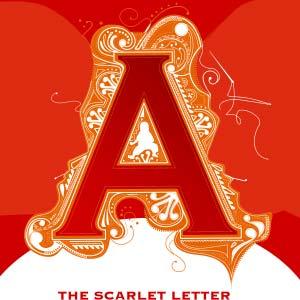 The Scarlet Letter is the story of Hester Prynne, a woman that commits adultery and is brandished with a red letter A - as a warning to others of the sin she committed. She is publicly ridiculed and despite this, refuses to give up the identity of the male culprit. Pearl, Hester Prynne's daughter, is also a constant reminder to Hester of her sin... and the child is credited with many spiritual qualities, both angelic and demonic.
Hawthorne reminds me of a poor man's Thomas Hardy. He has thought out the plot, spirituality, an ostracizing from society, redemption, etc of this book very well - the story itself is a marvel. However, the prose is far from Hardy standards and of course, the work does not have the typical Hardy tragic ending. However, the carefully woven plot is indicative of Hardy with the exception that it doesn't seem to be as complex a web. The work is brilliant in it's own right, but feels amateur when compared to some of the other greats of Hawethorne's time.
I enjoyed reading the story of Hester - she was a lovable character that you couldn't help but root for. The innocence, depth and devilishness of Pearl was written beautifully and it made you love her and feel creeped out by her at the same time. Her presence lingers on you well after you read about her and I haven't felt this way about a character since nearly a year ago, when I read Jack London's The Sea-Wolf.
 |
| My kind of humour |
QUOTATIONS:
“An effect – which I believe to be observable, more or less,
in every individual who has occupied the position – is, that, while he leans on
the mighty arm of the Republic, his own proper strength departs from him. He loses, in an extent proportioned to the
weakness or force of his original nature, the capability of self-support. If he
possesses an unusual share of native energy, or the enervating magic of place
do not operate too long upon him, his forfeited powers may be redeemable. The ejected officer – fortunate in the
unkindly shove that sends him forth betimes to struggle amid a struggling world
– may return to himself, and become all that he has ever been. But this seldom happens. He usually keeps his ground just long enough
for his own ruin, and is then thrust out, with sinews all unstrung, to totter
along the difficult footpath of life as he best may.” 42
“…there has never been, for me, the genial atmosphere which
a literary man requires, in order to ripen the best harvest of his mind. I shall do better amongst other faces; and
these familiar ones, it need hardly be said, will do just as well without me.”
49
“There was a remarkable intelligence in his features, as of
a person who had so cultivated his mental part that it could not fail to mold
the physical to itself, and become manifest by unmistakable tokens.” 65
“’…up to that epoch of my life, I had lived in vain. The world had been so cheerless! My heart was a habitation large enough for
many guests, but lonely and chill, and without a household fire. I longed to kindle one! It seemed not so wild
a dream – old as I was, and somber as I was, and misshapen as I was – that the
simple bliss, which is scattered far and wide, for all mankind to gather up,
might yet be mine. And so, Hester, I
drew thee into my heart, into its innermost chamber, and sought to warm thee by
the warmth which thy presence made there!’” 81
“Love, whether newly born or aroused from a deathlike
slumber, must always create a sunshine, filling the heart so full of radiance
that it overflows upon the outward world.” 224
“No man, for any considerable period, can wear one face to
himself and another to the multitude, without finally getting bewildered as to
which may be the true.” 237
“’Be true! Be true! Be true! Show freely to the world, if
not your worst, yet some trait whereby the worst may be inferred!’” 285
“It is a curious subject of observation and inquiry, whether
hatred and love be not the same thing at the bottom. Each, in its utmost development, supposes a
high degree of intimacy and heart knowledge; each renders one individual
dependent for the food of his affections and spiritual life upon another; each
leaves the passionate lover, or the no less passionate hater, forlorn and
desolate by the withdrawal of his subject.
Philosophically considered, therefore, the two passions seem essentially
the same, except that one happens to be seen in a celestial radiance, and the
other in a dusky and lurid glow.” 286
Subscribe to:
Posts (Atom)